A bra works harder than almost anything else in your wardrobe, yet it rarely gets the same laundry attention as the rest of your clothes. Tossed into a machine on a normal cycle, dried on a radiator, or folded flat into a crowded drawer, a bra can lose its shape and support within weeks instead of months.
The good news is that proper bra care takes only a little extra effort. Washing at the right temperature, drying without heat, and storing bras so the cups keep their form are simple habits that make a real difference. This guide walks through exactly how to wash, dry, store and rotate your bras, what to do differently for padded, cotton, lace, seamless and sports styles, and how to tell when a bra has genuinely reached the end of its useful life.
How Should You Take Care of Your Bra?
If you only remember a few rules, remember these:
Care Step
Best Practice
Washing
Gentle hand wash when possible
Water
Cool or lukewarm water
Detergent
Mild detergent, no bleach or fabric softener
Scrubbing
Gently press and swish avoid aggressive rubbing
Drying
Air dry naturally, away from a heater or radiator
Heat
Avoid tumble dryers and prolonged harsh sunlight
Storage
Keep bras organised without crushing the cups
Rotation
Rotate between bras instead of wearing the same one daily
Why Proper Bra Care Matters
A bra’s fit depends on several parts working together the band, the elastic, the cups, the straps and the hooks. Rough washing or careless storage puts stress on all of these at once, which is why a mistreated bra can start to feel different long before it looks worn out.
Caring for your bras properly helps in a few concrete ways:
● Keeps the band and straps elastic instead of loose or slack
● Protects molded or padded cups from creasing and losing their shape
● Prevents fabric, lace and seams from fraying or thinning early
● Keeps the bra fitting the way it did when you bought it, which keeps it comfortable
● Reduces the unnecessary wear that comes from harsh detergent, high heat and rough handling
None of this guarantees a bra will last a fixed number of months that depends on the fabric, how often it’s worn and how it’s treated but the right habits noticeably extend how long a bra stays in good, wearable condition.
How Often Should You Wash Your Bra?
There isn’t one washing frequency that works for every bra or every woman. How often you should wash depends on a mix of factors:
● How much you sweat and how warm the weather is
● How active you were while wearing it
● How long you wore the bra in a single day
● The fabric cotton absorbs sweat differently than lace or synthetic blends
● Whether you rotate between multiple bras or wear the same one repeatedly
As a practical starting point, many women wash everyday cotton and padded bras after every two to three wears, and sports bras after every wear because sweat builds up faster during activity. In Pakistan’s warmer months, you may find you need to wash a little more often simply because of heat and perspiration. Use these as a starting guideline rather than a fixed rule, and adjust based on how the bra actually feels and smells after wear.
How to Hand Wash a Bra Properly
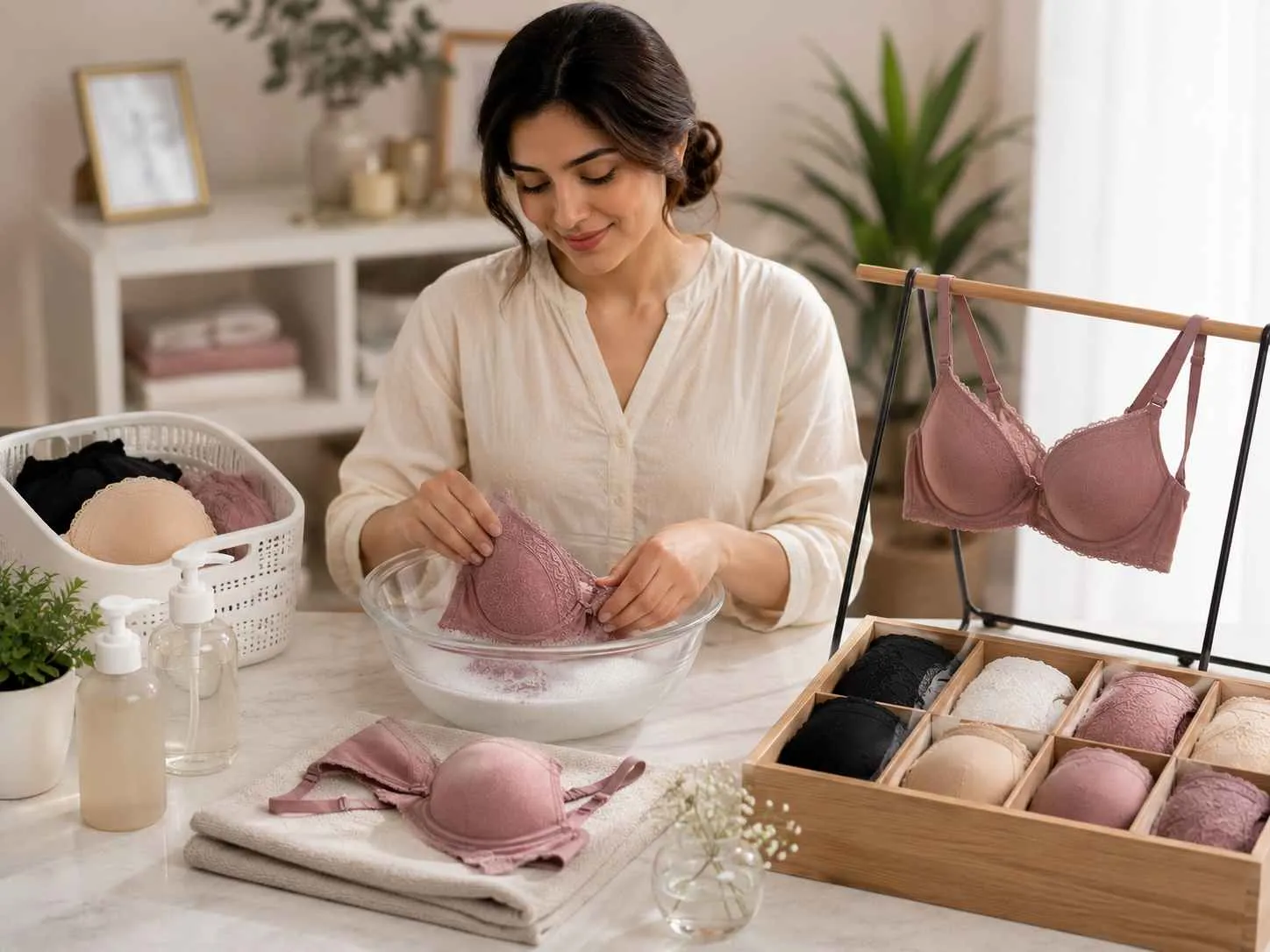
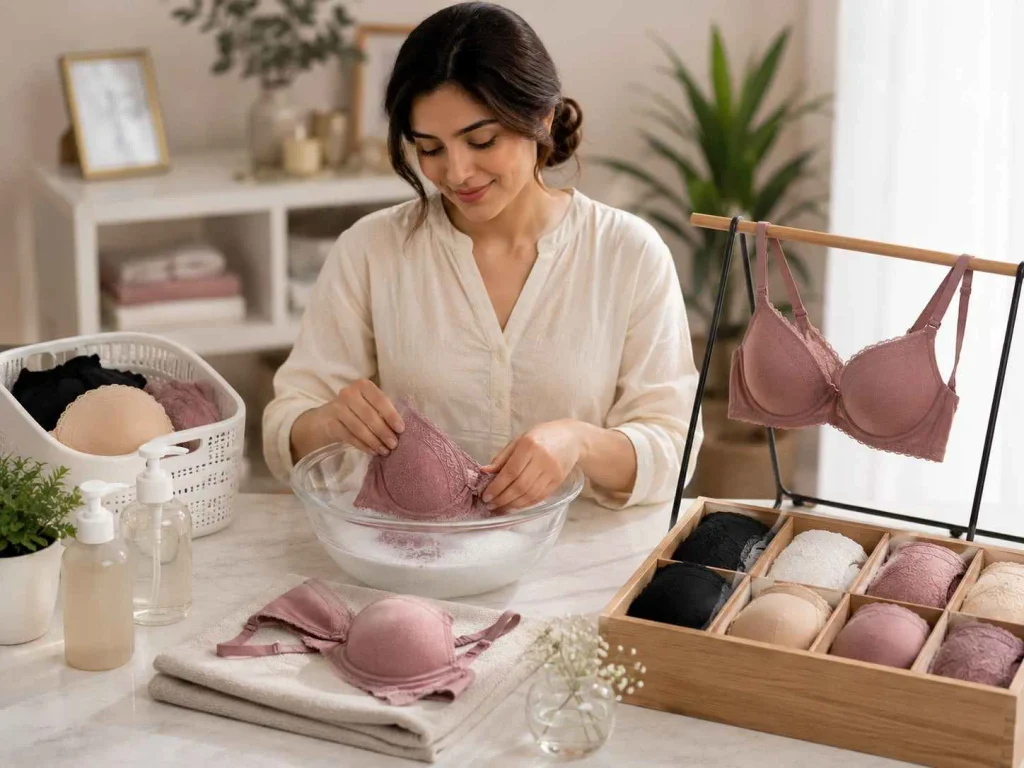
Hand washing is the gentlest way to clean a bra, and it gives you full control over water temperature and handling both of which protect elastic, foam and lace far better than a machine cycle can.
Step 1 Prepare Cool or Lukewarm Water
Fill a clean basin with cool or lukewarm water. Hot water breaks down elastic fibres and can warp foam padding, so it’s worth avoiding even for a heavily worn bra.
Step 2 Add Mild Detergent
Add a small amount of mild detergent, ideally one made for delicates. Skip bleach and fabric softener softener in particular coats elastic and reduces how well it stretches back into shape.
Step 3 Close the Hooks
Fasten the hooks before washing. This stops them from snagging lace or stretching out the eyes on the opposite side while the bra moves around in the water.
Step 4 Gently Clean the Bra
Submerge the bra and use your fingers to gently press and swish the fabric, paying extra attention to the underband and cups where sweat collects. Avoid scrubbing, twisting or wringing, since all three distort the shape of the cups and stretch the fabric.
Step 5 Rinse Thoroughly
Empty the soapy water and rinse with fresh, cool water until no detergent residue remains. Leftover detergent can irritate skin and slowly break down elastic, so a thorough rinse is worth the extra minute.
Step 6 Remove Excess Water Carefully
Never wring a bra. Instead, press it gently between your palms, or press padded cups gently from the outside, to push out excess water without distorting their shape.
Step 7 Air Dry Properly
Lay the bra flat on a clean towel, or hang it from the centre gore the small panel between the cups rather than the straps, so the wet fabric’s weight doesn’t stretch them.
Can You Wash a Bra in a Washing Machine?
Machine washing isn’t automatically harmful, but it needs to be done carefully, and some bras simply aren’t built to handle it. Always start by checking the care label it reflects how that specific bra’s fabric, foam and underwire (if any) were designed to be cleaned.
If the care label allows machine washing, or hand washing genuinely isn’t practical, these steps reduce the risk of damage:
●Place the bra inside a mesh lingerie bag so it isn’t tangled or stretched by other clothing
● Close all hooks before the bra goes into the bag
● Choose the gentlest or delicate cycle available, with cold or lukewarm water
● Avoid high-spin or heavy-duty cycles designed for towels and denim
● Never combine bras with zippers, Velcro or heavy fabrics that can snag delicate material
Even with these precautions, hand washing remains the more protective option for padded, lace and underwired bras, since no machine cycle fully replicates the gentleness of hand pressure.
How to Dry Your Bra Without Damaging It
Drying incorrectly undoes a careful wash almost instantly, so it deserves just as much attention.
● Air dry only this is the safest method for every bra type
● Hang from the centre gore, not the straps, to avoid stretching them under the weight of wet fabric
● Avoid tumble dryers entirely heat can melt or warp foam padding and shrink elastic permanently
● Keep bras out of intense, direct sunlight for long periods, since strong UV exposure can fade colour and weaken elastic fibres
● Reshape padded cups gently by hand while they’re still slightly damp, if needed
● Never wring or twist a bra to speed up drying
● Let the bra dry completely before putting it away storing it while even slightly damp encourages odour and mildew
How to Store Bras Properly
Storage affects a bra’s shape just as much as washing does, especially for anything with molded or padded cups.
● Only store bras once they’re clean and completely dry
● Group bras by type so padded and delicate styles aren’t crushed under heavier items
● For molded or padded cups, nest one cup inside the other with the cups facing up, rather than folding one flat into the other
● Avoid stacking too many bras on top of each other, which flattens cups and creases fabric over time
● Keep delicate lace or seamless bras separated from anything with hooks, zips or rough trims that could snag them
● Keep the storage drawer or space dry and free of moisture, which can encourage mildew on fabric and foam
How to Care for Different Types of Bras
Fabric and construction vary a lot between bra styles, so the same washing routine doesn’t suit every bra in your drawer.
Padded and Molded Bras
Padded and molded cups hold their shape through foam, so they’re the most vulnerable to crushing and creasing. Hand wash where possible, press water out gently rather than wringing, and store cups-up so the shape isn’t compressed.
Non-Padded Cotton Bras
Cotton is breathable and generally easier to care for, but it absorbs sweat readily, so give the underband extra attention when washing. Cotton bras can usually be folded flatter than padded styles since there’s no molded shape to protect.
Seamless Bras
Seamless bras rely on bonded fabric rather than stitched seams, which can be sensitive to friction and rough handling. Wash gently by hand and avoid rubbing the fabric against itself, which can weaken the bonded edges over time.
Lace Bras
Lace is delicate and can snag or tear under pressure. Use minimal detergent, handle the fabric with light pressure rather than rubbing, and lay flat to dry so the weight of water doesn’t distort the pattern.
Sports Bras
Sports bras absorb the most sweat, so washing after every wear is worth it. Their fabric is generally more resilient, so a delicate machine cycle in a mesh bag is usually fine if hand washing isn’t convenient just air dry flat afterwards rather than hanging, since wet stretch fabric is heavier.
Strapless Bras
Strapless bras depend heavily on the band for support, so band condition matters even more than usual. If your strapless bra has silicone grip strips along the inside band, wipe or wash these gently to keep their grip, and avoid folding the band tightly in storage.
How to Keep Your Bra Cups and Shape in Good Condition
● Never crush or fold molded cups flat nest them cups-up instead
● Avoid folding one cup inside the other unless the bra is genuinely non-padded and soft
● Never wring cups to remove water press gently instead
● Reshape cups by hand while damp if they’ve shifted slightly during washing
Even well-cared-for bras eventually wear out, and it’s more useful to judge a bra by its condition than by the calendar. Watch for these signs:
● The band has stretched out and rides up even on the tightest hook
● An underwire has shifted, bent or is poking through the fabric
● Cups look creased, collapsed or noticeably uneven between the two sides
● Straps slip constantly, no matter how tightly they’re adjusted
● Hooks or eyes are damaged, loose or won’t close securely
● Fabric has become thin, pilled, discoloured or generally worn-looking
● The bra simply doesn’t feel supportive or comfortable the way it used to
A bra showing several of these signs is past the point where care alone can restore it, and it’s worth replacing rather than continuing to wear it.
Why Rotating Your Bras Can Be Helpful
Elastic behaves a bit like a muscle it performs better when it gets time to recover instead of being stretched continuously, day after day. Wearing the same bra every single day keeps its elastic under constant tension, which can make it lose its snap sooner than if it were given a rest.
Having two or three bras in rotation means each one gets a break between wears, spreads out overall wear and tear, and gives you a backup while one is being washed and dried. It’s a simple habit, and it works alongside not instead of proper washing, drying and storage.
Good bra care starts with choosing bras that suit your everyday needs in the first place, and then following their care instructions consistently. If your everyday drawer needs a refresh, Velmora non-padded cotton bras are an easy, breathable option for daily wear, while the push-up and padded bras collection suits days when you want extra shape and support.
For workouts or high activity days, the teen’s bra and sports bra collection is designed to handle more frequent washing, and the crop top collection offers a comfortable, low-maintenance alternative for everyday layering. Whatever you choose, treating your bras gently from the very first wash goes a long way toward keeping them comfortable for longer.
FAQs
1. How should I wash a bra?
Hand wash in cool or lukewarm water with a mild detergent, gently pressing and swishing the fabric rather than scrubbing. Rinse thoroughly and avoid wringing.
2. Can I wash bras in a washing machine?
Yes, if the care label allows it. Close the hooks, place the bra in a mesh laundry bag, and use the gentlest or delicate cycle with cold or lukewarm water.
3. Should bras be hand washed?
Hand washing is generally the safer option, especially for padded, lace and underwired bras, because it avoids the agitation and friction of a machine cycle.
4. How often should I wash my bra?
This depends on sweat, weather, activity and fabric. Many women wash everyday bras after two to three wears and sports bras after every wear, adjusting based on how the bra feels and smells.
5. Can I put a bra in the dryer?
It’s best to avoid tumble dryers. Heat can warp foam padding, shrink elastic and weaken the overall structure of the bra.
6. How should I dry a bra?
Air dry it by laying it flat on a towel or hanging it from the centre gore, away from direct heat and prolonged harsh sunlight.
7. How should padded bras be washed?
Hand wash gently, press water out of the cups from the outside rather than wringing, and store them cups-up to protect their molded shape.
8. How should cotton bras be washed?
Cotton bras are relatively low-maintenance. Wash with a mild detergent in cool or lukewarm water, giving extra attention to the underband where sweat collects.
9. How should I store bras?
Keep bras clean and completely dry before storing, group them by type, and nest padded cups facing upward rather than folding them flat.
10. How do I keep bra cups from losing shape?
Avoid crushing, folding or stacking heavy items on molded cups, and never wring them. Reshape gently by hand while still slightly damp if needed.
11. How do I protect bra elastic?
Wash in cool water with a mild detergent, avoid bleach and fabric softener, and rotate between bras so elastic has time to recover between wears.
12. Can I wash bras with other clothes?
It’s best to wash bras separately or in a mesh bag, since zips, hooks and heavier fabrics can snag or stretch delicate bra fabric.
13. Should I close bra hooks before washing?
Yes. Closed hooks are less likely to snag fabric or lace, whether you’re hand washing or using a machine.
14. How can I make my bras last longer?
Follow the care label, wash and dry gently, avoid high heat, store cups carefully, and rotate between at least two or three bras.
15. When should I replace my bra?
Replace a bra when the band no longer stays snug, the underwire pokes through, the cups are misshapen, or the straps won’t stay adjusted condition matters more than a fixed timeline.
16. Can hot water damage a bra?
Yes. Hot water can weaken elastic fibres and warp foam padding, so cool or lukewarm water is recommended for washing.
17. Is fabric softener suitable for bras?
No. Fabric softener coats elastic fibres and reduces their stretch over time, so it’s best avoided for bras.
18. How should lace bras be washed?
Wash gently with minimal detergent and light pressure, avoiding rubbing. Lay flat to dry rather than hanging, since wet lace can distort under its own weight.
19. How should sports bras be cared for?
Wash after every wear due to sweat build-up. Hand washing or a delicate machine cycle in a mesh bag both work well, followed by air drying flat.
20. Why is my bra losing its shape?
Common causes include machine washing on a regular cycle, wringing, tumble drying, crushing molded cups in storage, and wearing the same bra daily without rotation.